Last month we attended the 43rd INC World Nut and Dried Fruit Congress in Macau. The event was very well attended, with approximately 1,300 participants from around the world.
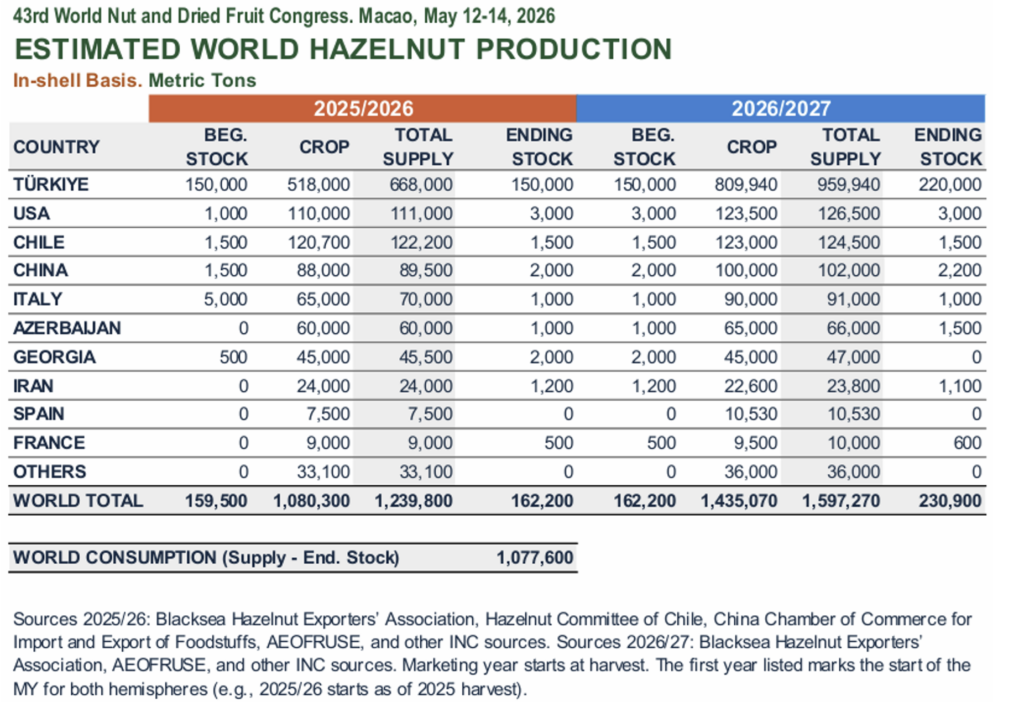
For those unfamiliar with the INC (International Nut & Dried Fruit Council), it is an organization composed of stakeholders across the nut and dried fruit industry. Originally formed to bring the various tree nut sectors together to share information, improve market transparency, and grow global demand, the INC has played a pivotal role in the industry’s development — especially since tree nuts lack a centralized exchange like cocoa, coffee, or soybeans. Today, the organization focuses on promotion, education, research, and advancing sustainable and ethical practices throughout the nut supply chain.
While the Congress covers many topics, the commodity presentations remain the main draw for most attendees.
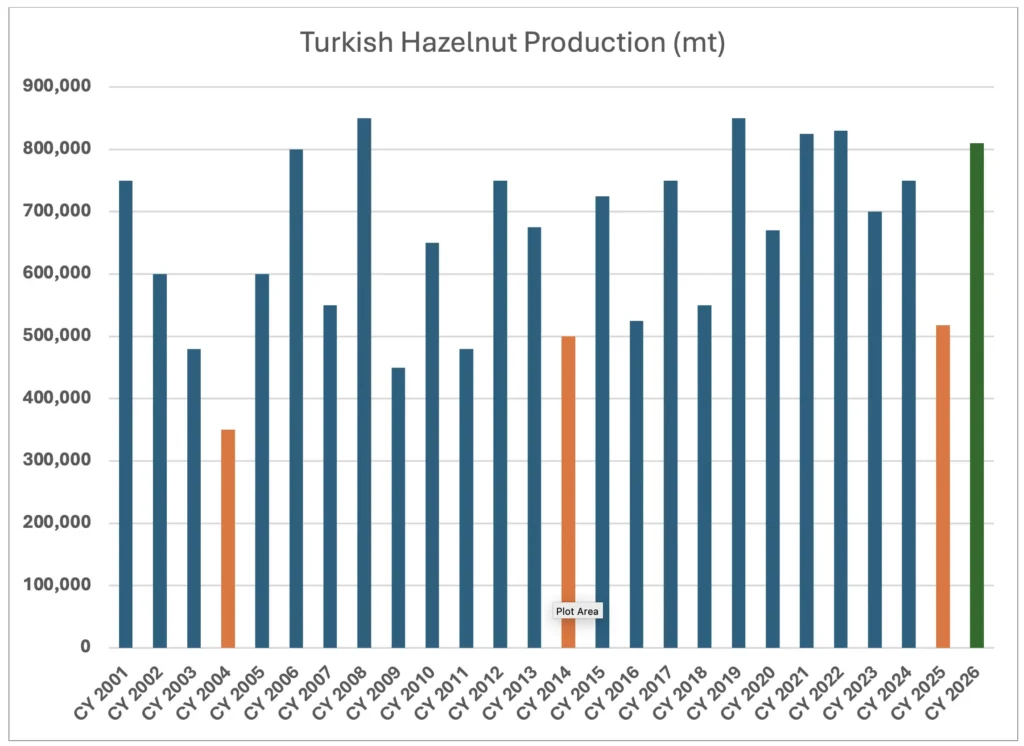
Although this update focuses on hazelnuts, several notes from other commodities are worth highlighting:
- California almonds reported that this is the first time in 30 years that industry acreage is declining — a trend that may continue.
- Pistachios are facing a devastating crop, with supply expected to drop about 40% from 2025 levels.
Both almonds and pistachios have made significant inroads into the ingredient market — an area where hazelnuts still have substantial room for growth. Marketers, R&D managers, and product developers should view hazelnuts not merely as a substitute for other nuts, but as a rising star ingredient with strong market appeal. Both of those commodities have made great strides into the ingredient market, and that is an area where hazelnuts have a lot of room to grow. Marketers, R&D managers, and Product Developers should start looking at hazelnuts not as a replacement or other nuts, but as a rising star ingredient with high marketability.