By: Kelly Ruef, ND | Spring 2026
I’m officially convinced that hazelnuts deserve a regular place in all our kitchens. The health benefits are so numerous and undeniable that not only do I incorporate hazelnuts into my diet on a daily basis, but I was also happily snacking on roasted hazelnuts while writing this article.

Being a Naturopathic Doctor (ND) married to a hazelnut farmer, I couldn’t help but want to learn more about the nutrition contained in this tiny nut. I’ve learned that, beyond their rich flavor and crunch, hazelnuts are packed with nutrients that support heart health, brain function, blood sugar balance, digestion, and even cancer prevention. Research continues to show that these tiny nuts may have a powerful impact on overall health.
Hazelnuts are considered an important part of the Mediterranean diet, one of the healthiest eating patterns in the world, and a diet that many Functional Medicine providers like myself recommend. Hazelnuts contain healthy fats, protein (including 4 essential amino acids), fiber, vitamins, minerals, antioxidants, antimicrobials, and anticancer nutrients, so it’s no wonder researchers have found that regularly eating nuts is linked to lower cardiovascular risk, cancer risk, and total mortality.

Among 11 types of nuts (hazelnut, walnut, Brazilian walnut, almond, pistachio, etc.), hazelnuts contain the highest levels of vitamin E, folate, and biotin. Remarkably, eating one serving of 40 grams of hazelnuts daily (~1/4 cup) can provide 100% of the recommended daily intake of vitamin E! Vitamin E plays a major role in protecting cells from oxidative damage and may help reduce the risk of cancer, diabetes, and hardening of arteries (atherosclerosis).
The benefits may even extend to brain health. According to a review by Gorji and colleagues, traditional Persian medicine recommended hazelnuts, almonds, and walnuts as protective foods against brain atrophy and memory loss. Modern researchers now believe the vitamins, healthy fats, minerals, and phytochemicals in these nuts may affect several pathways involved in preventing cognitive decline. For example, PUFAs and flavonoids are anti-inflammatory and neuroprotective, and selenium can help reduce neuronal death in Alzheimer’s disease patients. As discussed earlier, hazelnuts may offer significant cardiovascular benefits, and many compounds that protect heart health are also associated with protecting brain function.
Another surprising benefit of hazelnuts is their effect on blood sugar control. Although nuts contain fat, they may actually improve glucose metabolism. Research shows that eating hazelnuts with carbohydrate-rich meals can reduce blood glucose spikes after eating. Some studies also suggest improvements in HbA1c, a marker of long-term blood sugar control, in people with diabetes.
Hazelnuts are also high in fiber, especially insoluble fiber. A daily serving of 40 grams (~1/4 cup) provides about 5-7 grams of fiber, or about 20% of the daily recommended amount. Soluble fiber helps lower cholesterol and blood glucose levels, while insoluble fiber improves digestion and combats constipation. Fiber also slows digestion, helping people feel fuller for longer periods of time. This increase in satiety may explain why regular nut consumption is associated with lower rates of obesity despite nuts being calorie dense.
In fact, studies consistently show that people who eat nuts regularly tend to be leaner than those who do not. Researchers believe this may be due to increased fullness, higher metabolic rate from healthy fats, and reduced absorption of some fats and carbohydrates. Importantly, studies on hazelnuts repeatedly found no significant weight gain even when participants added them to their regular diets - and this is irrespective of study duration and dose of hazelnuts.
Consider switching out less healthful foods for hazelnuts. Hazelnuts can be eaten raw or roasted, with or without their skin. Interestingly, eating hazelnuts with the skin on (or roasting hazelnuts for longer periods) may increase some of their antioxidant properties! Hazelnut oil also offers many health benefits because it contains healthy fats, MUFAs (oleic acid), PUFAs (including omega-3s), vitamin E, vitamin A, B vitamins, selenium, calcium, flavonoids, and phytosterols. Compared to many animal fats, the fats in hazelnuts are primarily heart-healthy unsaturated fats, therefore, hazelnuts may be a great alternative especially when aiming to prevent cardiovascular disease.
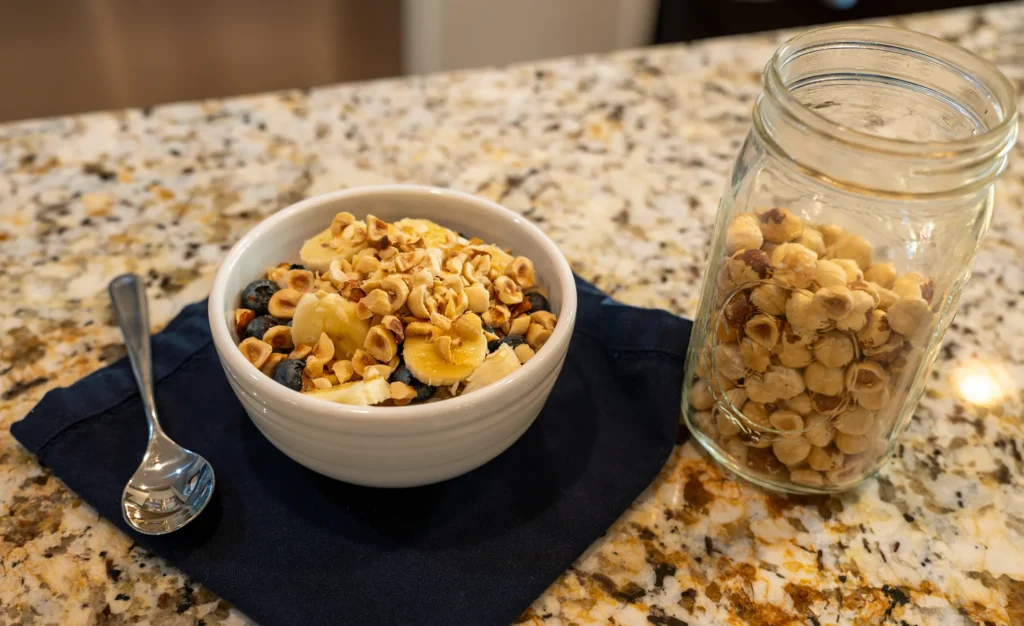
About 40 grams of hazelnuts (~1/4 cup) is considered a healthy serving size. My family and I enjoy eating them on their own, or mixing them with other nuts, raisins, and dark chocolate chips. I add them to oatmeal (along with hemp hearts and ground flaxseeds), sprinkle them on salads, and bake with them - chocolate + hazelnuts are the BEST combination. I have also found that chopped hazelnuts are delicious on goat cheese drizzled with honey – our dinner guests absolutely love this as part of a cheese board appetizer with crackers and grapes. You can use hazelnut oil in salad dressings by replacing part of the olive oil with hazelnut oil. My favorite homemade salad dressing combines olive oil, hazelnut oil, lemon juice, sherry vinegar, maple syrup, salt, pepper, and herbs like thyme and rosemary.
Overall, I’m learning that hazelnuts are much more than a tasty snack for my family. For such a small food, hazelnuts deliver an impressive amount of nutrition. They provide nutrients that may lower cholesterol, support cardiovascular function, improve blood sugar control, increase satiety, fight constipation, combat oxidative stress, and potentially reduce the risk of cancer and neurodegenerative disease. Research continues to support the idea that eating a serving of nuts daily is both achievable and beneficial. I know I’ll be continuing to explore how I can add hazelnuts to my family’s diet, whether it’s breakfast, lunch, dinner, or even dessert!
References:
Brown R, Ware L, Tey SL. Effects of Hazelnut Consumption on Cardiometabolic Risk Factors and Acceptance: A Systematic Review. Int J Environ Res Public Health. 2022 Mar 1;19(5):2880.
Gorji et al. Almond, hazelnut and walnut, three nuts for neuroprotection in Alzheimer's disease: A neuropharmacological review of their bioactive constituents. Pharmacol Res. 2018 Mar;129:115-127.
Rondanelli et al. Phytoextracts for Human Health from Raw and Roasted Hazelnuts and from Hazelnut Skin and Oil: A Narrative Review. Nutrients. 2023 May 23;15(11):2421.