By: Troy Johnson | Published on: Sept 29, 2026
Growers are already in the orchards, the weather has cooperated all season, and the state's signature crop keeps cementing its place at the top of Oregon agriculture. But this year's early industry estimate may be getting ahead of itself.
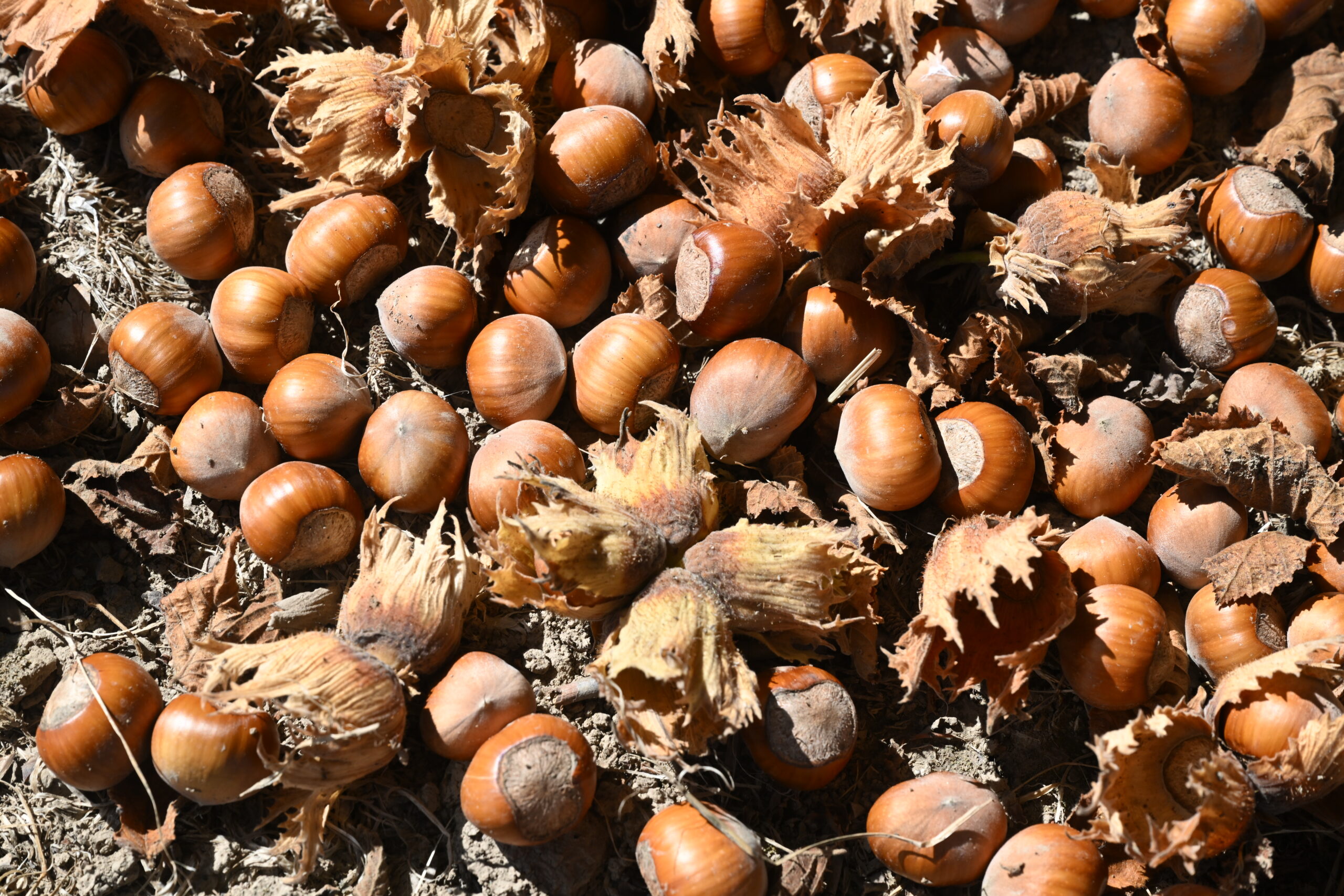
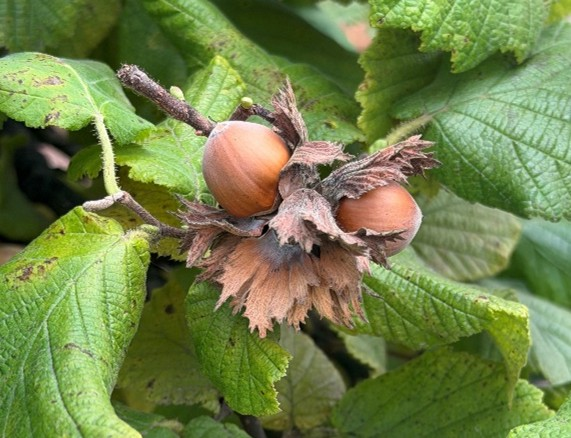
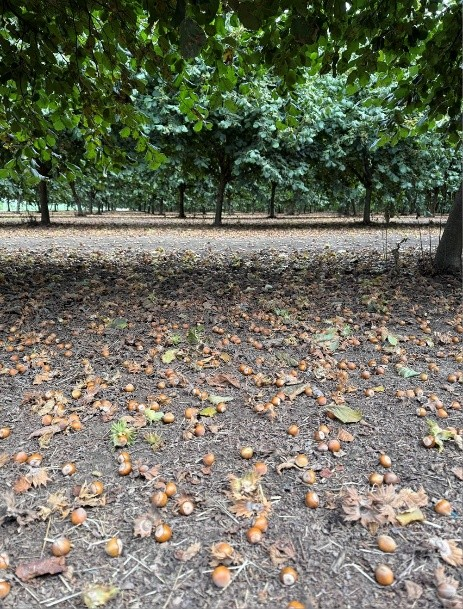
Harvest is underway across Oregon's hazelnut orchards, and by most accounts it's shaping up to be a very good year. Several early varieties are already coming off the trees, and receiving stations up and down the Willamette Valley are starting to see truckloads roll in. The bulk of the crop, however, is still on the trees — and growers expect the real volume to arrive over the next two weeks as the later, heavier-bearing varieties reach maturity.
A Good Crop — But How Big, Exactly?
That question is at the center of some healthy debate this season. An early, subjective industry estimate has pegged the 2026 Oregon crop at roughly 142,000 US tons (127,800MT). At Hazelnut Growers of Oregon, we don't think that number holds up.
Our own read on the orchards and nut set this year points to a crop that's up only modestly from last season — not the sharp jump that a 142,000-ton figure would imply. We're forecasting the 2026 Oregon hazelnut crop at approximately 135,000 US tons (123,000MT), a solid, healthy harvest, but a more realistic one than the early industry guess suggests.
Early-season estimates are always exactly that — early. They're built before harvest is fully underway and before receiving stations have real weight on the scale. As more of the crop comes in over the coming weeks, we expect the numbers to converge closer to our estimate.

Favorable Weather, Smooth Receiving
One of the more encouraging parts of this harvest has been the weather. Oregon has enjoyed a dry, stable stretch through the heart of harvest season, and the forecast looks favorable for the weeks ahead. That matters more than it might seem: wet conditions at harvest don't just slow picking in the orchard, they can back up receiving stations, where damp nuts clog and slow the dryers that every load has to pass through before it can be processed.
With dry conditions holding, we don't anticipate the kind of rain-driven bottlenecks at the dryers that have complicated past harvests. That should keep receipts moving smoothly as volume ramps up over the next two weeks.
Hazelnuts' Growing Stature in Oregon Agriculture
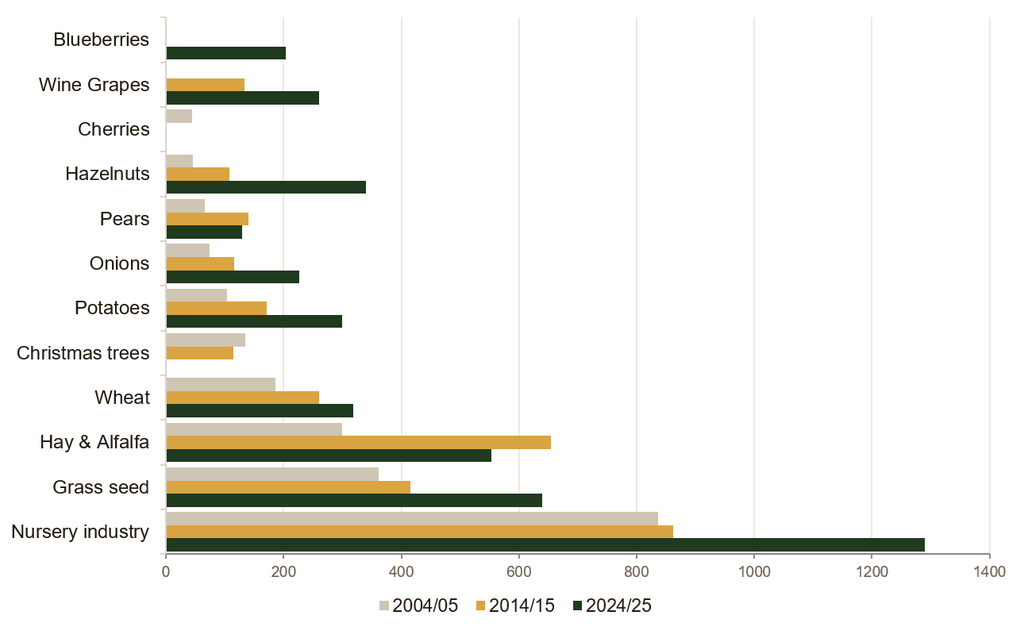
This year's harvest arrives as hazelnuts continue to climb in importance to the state's farm economy. Hazelnuts are now Oregon's number one human-consumable agricultural crop, having overtaken commodities like wine, onions, and potatoes in total value over the past two decades. Crops that once ranked alongside hazelnuts, like Christmas trees and cherries, have since dropped out of the state's top-value rankings altogether — while hazelnuts have moved the other direction.
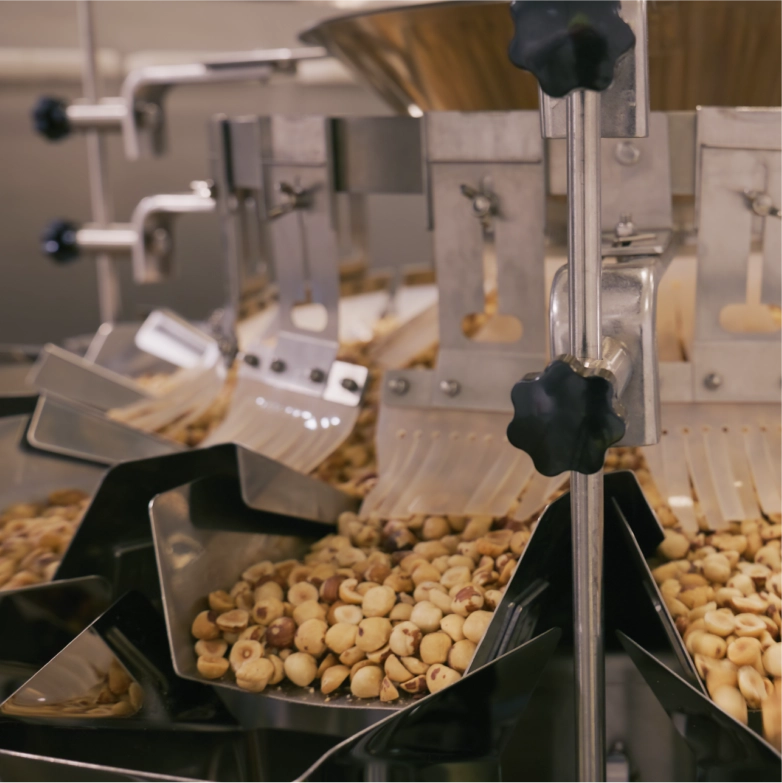
Part of that growth traces back to a fundamental shift in how the crop gets sold. In 2000, in-shell hazelnuts made up the large majority of volume sold; today, roughly 95% of volume moves as shelled kernel, up from about 15% at the turn of the century. That shift toward shelled product — driven by changing consumer preferences, a trade war with China, and rising barriers to entry that have consolidated processing into fewer, more capital-intensive operations — has helped the industry capture more value per pound and reach more customers, both domestically and abroad.
The soil and weather conditions throughout the Willamette Valley of Oregon create the ideal growing region for hazelnuts that are full of flavor and have almost a sweetness to them compared to other origins. If you haven’t tried Oregon hazelnuts yet, you need to. We are actively selling right now so reach out for offers.
Hazelnut Growers Bargaining Association Indication of Minimum Grower Price
Hazelnut growers in Oregon and Washington have a long tradition of using the Hazelnut Growers Bargaining Association (HGBA) to negotiate the terms on which processors pay growers. This cooperative association was formed in 1984 and still thrives today. The Association reaches an agreement with processors on the terms under which growers will be paid. Not every grower participates, and on occasion not every processor does either. Even so, the Association sets the standard that growers and processors generally follow.
At the start of each hazelnut season, the Association’s Board of Directors meets to give the Association’s Director guidance on the terms it believes are appropriate for that season. For most of the Association’s history, that included a Minimum Grower Price that also became, in practice, the maximum price growers received.
With the industry’s strategic shift away from in-shell sales concentrated from October through January, the Association now works with processors to set terms that let them market product throughout the year and meet customers’ needs. The owners of Hazelnut Growers of Oregon instituted a business model of operating as efficiently as possible, while using a fixed fee margin, and returning the remainder to growers. That philosophy removes price manipulation from negotiations with both customers and growers. It also changes the purpose of the minimum-price guarantee. Instead of serving as a cost-plus pricing tool, the minimum is now a guaranteed price level growers can use for banking purposes until the following March, when they receive the revised price.