Another key insight shared at the 43rd INC World Nut and Dried Fruit Congress in Macau (May 2026) was the current scale of hazelnut plantings across the major producing regions:
It is no surprise that Turkey has by far the largest planted area. However, it is important to note that nearly all hectares in Turkey and most other origins are mature and fully productive. In contrast, only about 82% of U.S. planted hectares are currently in production, while Chile’s percentage is likely even lower as many orchards continue to mature.
The graph below illustrates tons produced per hectare. U.S. growers achieve nearly 2.5 times more hazelnuts per hectare than most other origins. American producers are currently forecasting another record crop, assuming no major weather challenges such as heat stress, drought, or excessively wet harvest conditions.
We have been actively collaborating with several companies on exciting new hazelnut products scheduled to launch later this year and early next year. Even with strong expected harvests in the USA and other origins, we believe this is the ideal time to drive increased demand.
The past year clearly demonstrated that hazelnuts grown in the Western Hemisphere are legitimate origins that produce exceptional quality. They are far more than a passing trend. With a more diverse global supply base, the industry is now better positioned to handle crop failures in any one region without causing demand destruction from extreme price spikes. Processors from all origins must move beyond simply taking orders and become proactive demand builders.
Although new-crop supply is still several months away, we have sample product available now for R&D teams. If you’re developing new hazelnut applications, reach out — we’d be happy to support your efforts.
Last month we attended the 43rd INC World Nut and Dried Fruit Congress in Macau. The event was very well attended, with approximately 1,300 participants from around the world.
For those unfamiliar with the INC (International Nut & Dried Fruit Council), it is an organization composed of stakeholders across the nut and dried fruit industry. Originally formed to bring the various tree nut sectors together to share information, improve market transparency, and grow global demand, the INC has played a pivotal role in the industry’s development — especially since tree nuts lack a centralized exchange like cocoa, coffee, or soybeans. Today, the organization focuses on promotion, education, research, and advancing sustainable and ethical practices throughout the nut supply chain.
While the Congress covers many topics, the commodity presentations remain the main draw for most attendees.
Although this update focuses on hazelnuts, several notes from other commodities are worth highlighting:
California almonds reported that this is the first time in 30 years that industry acreage is declining — a trend that may continue.
Pistachios are facing a devastating crop, with supply expected to drop about 40% from 2025 levels.
Both almonds and pistachios have made significant inroads into the ingredient market — an area where hazelnuts still have substantial room for growth. Marketers, R&D managers, and product developers should view hazelnuts not merely as a substitute for other nuts, but as a rising star ingredient with strong market appeal. Both of those commodities have made great strides into the ingredient market, and that is an area where hazelnuts have a lot of room to grow. Marketers, R&D managers, and Product Developers should start looking at hazelnuts not as a replacement or other nuts, but as a rising star ingredient with high marketability.
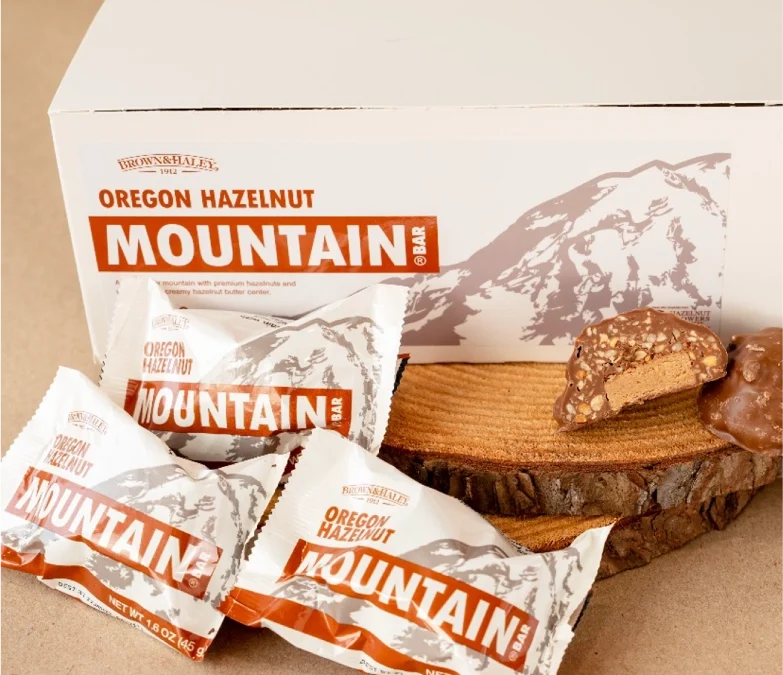
Later this month, Brown & Haley will begin distributing the new Oregon Hazelnut Mountain Bar® through their channels. If you’re in the Pacific Northwest and have a bit of grey in your hair, you likely have fond memories of these delicious treats made in Tacoma, Washington, with the iconic Mt. Rainier as the backdrop to their facility.
In fact, it was the majestic mountain that inspired the founders to create the first Mountain Bar® in 1915. It has been 54 years since the company last added a new Mountain Bar flavor, and they couldn’t be more excited about this one. Reviews from the test run have been outstanding, and the new bar truly Unleashes the Power of Hazelnuts.
At the 43rd INC World Nut and Dried Fruit Congress, Hazelnut Growers of Oregon presented each participant with two of these fabulous Mountain Bars—two because we knew that after one, everyone would want another!
Later this month, customers can purchase the Oregon Hazelnut Mountain Bar online at www.brown-haley.com and soon at retail outlets including Hudson News, ACE Hardware, Harbor Wholesale, Ben Franklin, Bi-Mart, and others.
We encourage you to try this delicious new flavor and enjoy the perfect combination of premium hazelnuts and rich chocolate
I’m officially convinced that hazelnuts deserve a regular place in all our kitchens. The health benefits are so numerous and undeniable that not only do I incorporate hazelnuts into my diet on a daily basis, but I was also happily snacking on roasted hazelnuts while writing this article.
Being a Naturopathic Doctor (ND) married to a hazelnut farmer, I couldn’t help but want to learn more about the nutrition contained in this tiny nut. I’ve learned that, beyond their rich flavor and crunch, hazelnuts are packed with nutrients that support heart health, brain function, blood sugar balance, digestion, and even cancer prevention. Research continues to show that these tiny nuts may have a powerful impact on overall health.
Hazelnuts are considered an important part of the Mediterranean diet, one of the healthiest eating patterns in the world, and a diet that many Functional Medicine providers like myself recommend. Hazelnuts contain healthy fats, protein (including 4 essential amino acids), fiber, vitamins, minerals, antioxidants, antimicrobials, and anticancer nutrients, so it’s no wonder researchers have found that regularly eating nuts is linked to lower cardiovascular risk, cancer risk, and total mortality.
Among 11 types of nuts (hazelnut, walnut, Brazilian walnut, almond, pistachio, etc.), hazelnuts contain the highest levels of vitamin E, folate, and biotin. Remarkably, eating one serving of 40 grams of hazelnuts daily (~1/4 cup) can provide 100% of the recommended daily intake of vitamin E! Vitamin E plays a major role in protecting cells from oxidative damage and may help reduce the risk of cancer, diabetes, and hardening of arteries (atherosclerosis).
The benefits may even extend to brain health. According to a review by Gorji and colleagues, traditional Persian medicine recommended hazelnuts, almonds, and walnuts as protective foods against brain atrophy and memory loss. Modern researchers now believe the vitamins, healthy fats, minerals, and phytochemicals in these nuts may affect several pathways involved in preventing cognitive decline. For example, PUFAs and flavonoids are anti-inflammatory and neuroprotective, and selenium can help reduce neuronal death in Alzheimer’s disease patients. As discussed earlier, hazelnuts may offer significant cardiovascular benefits, and many compounds that protect heart health are also associated with protecting brain function.
Another surprising benefit of hazelnuts is their effect on blood sugar control. Although nuts contain fat, they may actually improve glucose metabolism. Research shows that eating hazelnuts with carbohydrate-rich meals can reduce blood glucose spikes after eating. Some studies also suggest improvements in HbA1c, a marker of long-term blood sugar control, in people with diabetes.
Hazelnuts are also high in fiber, especially insoluble fiber. A daily serving of 40 grams (~1/4 cup) provides about 5-7 grams of fiber, or about 20% of the daily recommended amount. Soluble fiber helps lower cholesterol and blood glucose levels, while insoluble fiber improves digestion and combats constipation. Fiber also slows digestion, helping people feel fuller for longer periods of time. This increase in satiety may explain why regular nut consumption is associated with lower rates of obesity despite nuts being calorie dense.
In fact, studies consistently show that people who eat nuts regularly tend to be leaner than those who do not. Researchers believe this may be due to increased fullness, higher metabolic rate from healthy fats, and reduced absorption of some fats and carbohydrates. Importantly, studies on hazelnuts repeatedly found no significant weight gain even when participants added them to their regular diets – and this is irrespective of study duration and dose of hazelnuts.
Consider switching out less healthful foods for hazelnuts. Hazelnuts can be eaten raw or roasted, with or without their skin. Interestingly, eating hazelnuts with the skin on (or roasting hazelnuts for longer periods) may increase some of their antioxidant properties! Hazelnut oil also offers many health benefits because it contains healthy fats, MUFAs (oleic acid), PUFAs (including omega-3s), vitamin E, vitamin A, B vitamins, selenium, calcium, flavonoids, and phytosterols. Compared to many animal fats, the fats in hazelnuts are primarily heart-healthy unsaturated fats, therefore, hazelnuts may be a great alternative especially when aiming to prevent cardiovascular disease.
About 40 grams of hazelnuts (~1/4 cup) is considered a healthy serving size. My family and I enjoy eating them on their own, or mixing them with other nuts, raisins, and dark chocolate chips. I add them to oatmeal (along with hemp hearts and ground flaxseeds), sprinkle them on salads, and bake with them – chocolate + hazelnuts are the BEST combination. I have also found that chopped hazelnuts are delicious on goat cheese drizzled with honey – our dinner guests absolutely love this as part of a cheese board appetizer with crackers and grapes. You can use hazelnut oil in salad dressings by replacing part of the olive oil with hazelnut oil. My favorite homemade salad dressing combines olive oil, hazelnut oil, lemon juice, sherry vinegar, maple syrup, salt, pepper, and herbs like thyme and rosemary.
Overall, I’m learning that hazelnuts are much more than a tasty snack for my family. For such a small food, hazelnuts deliver an impressive amount of nutrition. They provide nutrients that may lower cholesterol, support cardiovascular function, improve blood sugar control, increase satiety, fight constipation, combat oxidative stress, and potentially reduce the risk of cancer and neurodegenerative disease. Research continues to support the idea that eating a serving of nuts daily is both achievable and beneficial. I know I’ll be continuing to explore how I can add hazelnuts to my family’s diet, whether it’s breakfast, lunch, dinner, or even dessert!
References:
Brown R, Ware L, Tey SL. Effects of Hazelnut Consumption on Cardiometabolic Risk Factors and Acceptance: A Systematic Review. Int J Environ Res Public Health. 2022 Mar 1;19(5):2880.
Gorji et al. Almond, hazelnut and walnut, three nuts for neuroprotection in Alzheimer’s disease: A neuropharmacological review of their bioactive constituents. Pharmacol Res. 2018 Mar;129:115-127.
Rondanelli et al. Phytoextracts for Human Health from Raw and Roasted Hazelnuts and from Hazelnut Skin and Oil: A Narrative Review. Nutrients. 2023 May 23;15(11):2421.